
A Brief History of the Converse Chuck Taylor All Star
Update, Jan 2025: After many years of stocking Converse we've retired it from our Store range.. It may return, never say never! We do however stock a wide range of trainers and sneakers that will suit your needs, so maybe check out some new styles below. Scroll right to the bottom to find out more.
One of the most recognised footwear silhouettes ever made, the Converse All Star, also known as the Chuck Taylor All Star, has a history that spans more than 100 years. Adopted by athletes, musicians, skaters, and everyday wearers across the globe, the All Star has crossed through decades of trends without losing its relevance. Here is how it got there.
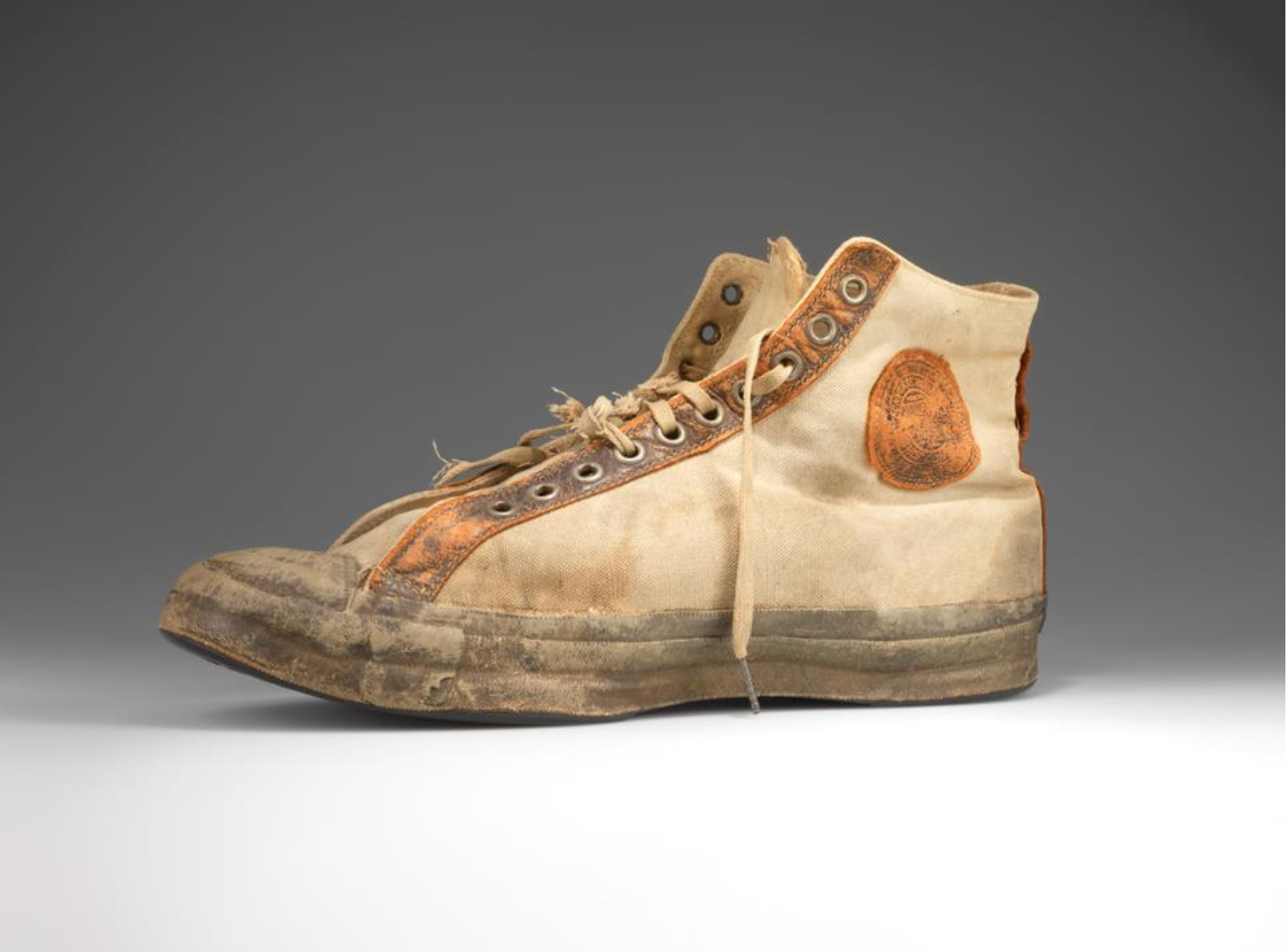
One of the most popular and iconic footwear silhouettes of all time, the Converse All Star, also known as the Chuck Taylor All Star, has a long and rich history spanning almost 100 years. Adopted by numerous subcultures and the subject of countless trends, the All Star has been a statement piece for many, a versatile style that remains hugely popular to this day.
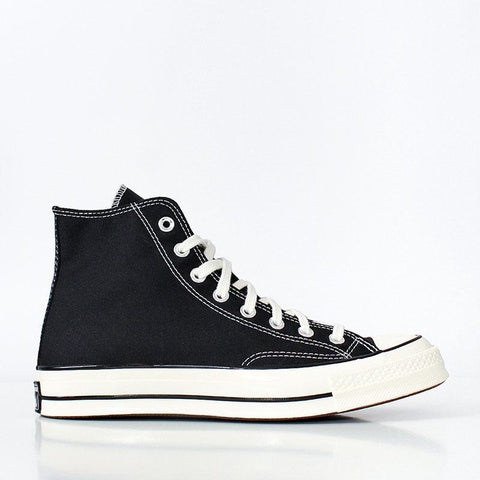
Where It All Started: 1908 to 1917
The Converse story began in 1908 when Marquis Mills founded the Converse Rubber Shoe Company, building footwear that made heavy use of rubber in its construction. In 1917, the company released the All Star, a canvas and rubber basketball shoe that would become the foundation for everything that followed. Its original colourway was a natural brown with black trim, and its construction, with a sturdy rubber sole and supportive canvas upper, was unlike anything else on the market at the time.
This was an era when trainers were not worn for leisure. Footwear had a job to do, and the All Star was designed specifically to meet the growing demand of basketball, a sport rapidly gaining popularity across North America. It became the first mass-produced basketball shoe on the continent, and the template it set was genuinely new.
Chuck Taylor Changes Everything: 1921 to 1936
In 1921, a basketball player named Charles H. Taylor, better known as Chuck Taylor, came across the All Star while playing for the Akron Firestones. He joined the Converse sales team and immediately set about building the shoe's reputation in a way that felt natural and credible.
Taylor ran basketball clinics at high schools across America, teaching the game to young players while promoting the shoe. He also helped produce the Converse Basketball Yearbook, a publication dedicated to celebrating basketball culture. His approach was less a hard sell and more a genuine investment in the sport, and it worked.
By 1932, Taylor's contribution to the brand was so significant that Converse added his name to the ankle patch of the shoe, creating what we now know as the Chuck Taylor All Star.
In 1936, Taylor went further, designing a white hi-top model with red and blue accents for the USA Olympic basketball team. When America entered World War Two, the white hi-top became the official training shoe of the United States Armed Forces, worn during exercise and physical training by soldiers across the country. Post-War Growth and the NBA Connection: 1946 to the 1960s
After the war, Converse introduced the black and white colourway, which would go on to become one of the most recognisable versions of the shoe. The 1946 merger of the Basketball Association of America and the National Basketball League to form the NBA gave Converse a major platform, and the Chuck Taylor All Star became the go-to shoe for professional, college, and high school players alike.
By the 1960s, Converse held around 90% of the American sneaker market. The company introduced the low-top Oxford version in 1957, offering a more casual option that sat slightly apart from the basketball-focused hi-top. It came in a wider range of colours and found an audience among wearers who wanted the look without the court context.
In 1968, Chuck Taylor was inducted into the Basketball Hall of Fame and named the Ambassador to Basketball. He passed away the following year, and with him went a chapter of Converse's dominance.

Competition and a New Identity: 1970s to 1990s
As brands such as Nike began introducing technology-driven performance footwear in the 1970s, basketball players started to move away from the flat-soled Chuck Taylor in favour of shoes built for speed, cushioning, and injury prevention. Converse's grip on the athletic market loosened.
What happened next, however, gave the shoe a different kind of staying power.
The simplicity of the All Star, the same quality that had made it useful on the court, made it appealing to a growing punk rock scene in the late 1970s. The shoe carried a rough, unpolished quality that fitted a movement that was deliberately pushing back against mainstream consumer culture. From there, it moved through rock, then into hip hop in the 1980s, then deeper into alternative and indie scenes in the 1990s.
At each stage, the Chuck Taylor was adopted without Converse having to force it. The shoe's flat sole, canvas construction, and plain silhouette gave it a versatility that spoke to very different groups for very different reasons. Converse recognised this and responded by expanding the range of colourways, prints, and sizing to reach a broader audience.
 Bankruptcy and the Nike Era: 2003 Onwards
Despite its cultural presence, Converse struggled financially through ownership and management changes in the late 1990s and early 2000s. In 2003, the company filed for bankruptcy.
That same year, Nike acquired Converse. What followed was a considered revival built on heritage rather than reinvention. Nike leaned into the shoe's history, its connection to music, sport, and subcultural movements, and used that story to bring the Chuck Taylor All Star to a new generation. The timing coincided with a wider cultural appetite for retro and heritage products, and Converse found itself relevant again.
By 2012, Nike reported that Chuck Taylor sales had reached 450 million dollars in a single year, equivalent to selling a pair roughly every 43 seconds.
Why It Has Lasted
The Chuck Taylor All Star works because it does not try to do too much. It is a simple shoe built from canvas and rubber, available in dozens of colourways, in both hi-top and low-top cuts. It has no performance claims to make and no specific wearer in mind. That openness is what has allowed it to travel across decades, sports, music scenes, and fashion movements without feeling out of place in any of them.
It is one of the few pieces of footwear that has been genuinely new, genuinely iconic, and genuinely ordinary, all at the same time.
You can shop our full Converse range here
Looking for Something Else?
If you appreciate the clean, low-profile build of the Chuck Taylor, there are several other brands worth exploring that carry a similar no-fuss approach to footwear.
Vans have built their reputation on a flat-soled, canvas and vulcanised rubber construction that shares a lot of DNA with the Chuck Taylor. Originally designed for skateboarders in the 1960s, Vans carry their own long subcultural history and are made to take wear. The Vans range at Urban Industry covers core silhouettes including the Old Skool and Era, both of which suit the same kind of versatile, everyday use that made the Chuck Taylor a staple.
Novesta are a Slovak footwear brand with roots going back to 1939. They make simple, well-constructed canvas and rubber shoes using traditional methods, and their trainers sit in a similar visual space to the All Star. If you want something with a genuine manufacturing heritage and a quieter profile, Novesta are worth a look.
Adidas Originals offer a catalogue of archive silhouettes that share the Chuck Taylor's emphasis on clean lines and lasting design. The Campus and the Gazelle have both been in continuous production for decades and carry a similar kind of quiet, earned credibility. Shop adidas Originals here.
New Balance are another option for anyone who wants a trainer with real history behind it. Known for their careful, considered approach to construction and a strong retro archive, models like the New Balance 574 and 991 have built a loyal following on the basis of quality and longevity rather than trend chasing.
Karhu are a Finnish brand founded in 1916, making them one of the oldest sports footwear companies in the world. Their running heritage is genuine, and their archive silhouettes, particularly the Fusion and Mestari, have found a contemporary following for the same reasons the Chuck Taylor has endured: honest construction and a distinct look.
You can browse all footwear brands at Urban Industry, Vans, Novesta, New Balance, Adidas Originals, and Karhu, in the shoes section of the store.
1 comment
Mon hitoire avec CONVERSE ALL STARS commence en 1983 .
J’avais 18 ans à l’epoque ,
Et depuis , je roule toujours avec .
Aujourd’hui encore à 61 ans j’ai 2 pairs de CONVERS ALL STARS .
Merci pour votre recit sur l’histoire de son parcours .